


his November, the Business 20 comes home. From November 9 to 11, the B20 USA Summit takes over Washington’s Wharf District, with plenary sessions on the Anthem stage and a village of hosted venues that includes the National Governors Association’s Governors House, UK House, the POLITICO Pub, and Kalshi House. It is the first time the United States has hosted the G20’s private sector forum, and the U.S. Chamber of Commerce expects thousands of delegates from companies and countries that account for roughly three-quarters of world trade. The program opens Monday night with a ceremony and concert, then runs two mornings of plenary sessions moderated by journalists from CNBC, POLITICO, and Fortune. Four task forces — focused on economic growth, innovation, trade, and energy — frame the conversation. Their recommendations, published in the B20 Leaders’ Statement, provide the foundation for discussions at the summit and will help shape the business agenda that delegates will carry to G20 governments ahead of the December summit. The B20 opens on the heels of U.S. midterm elections that reflected escalating public concerns about inflation and tariffs, AI’s impact on jobs, and the growing strain of data centers on local communities.
Context
The B20 was born of crisis. In 2009, as the financial meltdown turned the G20 into the world’s main venue for economic coordination, the U.S. Chamber and a coalition of business federations helped create the B20 so the private sector had a formal channel into G20 policymaking. The United States has taken part in every cycle since. Until now, it had never hosted the B20.
That changed when Washington assumed the G20 presidency on December 1, 2025, pledging to return the group to what the administration calls its core mission of growth. Its stated priorities are limiting regulatory burdens, unlocking reliable and affordable energy, and pioneering new technologies. President Trump will host the Leaders’ Summit on December 14–15 at Trump National Doral Miami. The presidency has also been contentious. South Africa, the previous host, was left off the invitation list after the U.S. boycotted Johannesburg. Analysts at the South African Institute of International Affairs are among those who have argued that the narrowed agenda sidesteps the structural problems facing developing economies. Supporters counter that a tighter G20 is a more productive one.
The Chamber has taken the cue. B20 USA is led by co-chairs Suzanne P. Clark, the Chamber’s President and CEO, and Chamber Board of Directors member Ross Perot Jr., the founder and chairman of Hillwood Development Company. Former U.S. House Ways and Means Chairman Kevin Brady serves as Sherpa. Clark has described the year as aligned with the administration’s “back to basics” G20 agenda and set an ambitious target: use the B20 to help lift U.S. growth by a point or more. That is why this B20 adds something past cycles lacked: a deal making floor. Planning materials promise a “Hall of States and Cities” and an “Embassy Row” to connect foreign investors with American communities, noting that G20 nations already supply two-thirds of the $5.7 trillion in foreign direct investment in the United States. The summit also lands in America’s 250th year, a framing the hosts have leaned into from the start.
What’s on the agenda
Heading into B20 USA, here’s what to expect:
Powering the AI age. Energy is the summit’s loudest theme. The Energy Task Force, chaired by GE Vernova CEO Scott Strazik, wants G20 governments to push annual grid investment past $600 billion by 2030, scale nuclear to roughly 950 gigawatts by 2050, and cut permitting timelines to one to three years. This is a pace that only the fastest G20 economies achieve today. Wednesday’s plenary reads like an energy roundtable, with the CEOs of EQT, Williams, The Nuclear Company, and Lithium Americas alongside S&P Global’s Daniel Yergin. Shell USA and Halliburton take the stage Tuesday. These ambitions come amid growing resistance to data center expansion, fueled by concerns over rising electricity costs, water consumption, and other impacts on communities. The backlash raises questions about public support for the infrastructure needed to drive AI growth. Watch whether the ask for technology-neutral development finance for grids, which would open transmission projects in emerging markets to multilateral lending, finds a sponsor among G20 finance ministries.
Trade, in the host’s backyard. The Trade Task Force, chaired by Dow’s Jim Fitterling, is unusually blunt: its chapter of the Leaders’ Statement says WTO functions are “not fit for purpose” and calls for cutting the share of world imports subject to restrictive measures from 16.9 percent to 10 percent by 2030, halving the $2.5 trillion trade finance gap, and keeping digital trade duty-free. Delegations are arriving with tariffs on their minds. The Canadian Chamber, for one, built its mission program around Washington’s trade agenda and where it is going. With the CEOs of U.S. Steel, UPS, and DHL Express USA on the plenary bill, watch how candid foreign business leaders are willing to be about U.S. trade policy on American soil.
AI, innovation, and the workforce that uses it. Two task forces, led by Citadel’s Ken Griffin and Amazon’s David Zapolsky, converge on AI. They want 80 percent of businesses generating value from AI by 2028, up from 40 percent, national post-quantum cryptography plans by 2030, and R&D spending of 3 percent of GDP across the G20. This is a bar only four-member countries clear today. The workforce chapter asks governments to cut the share of employers citing skills gaps from 63 percent to below 40 percent, and to teach durable skills such as judgment and critical thinking alongside digital and AI literacy and personal finance. The stated emphasis on human capabilities, technological skills, and learning is especially relevant to Diplomatic Courier’s ongoing work with partners on the Future of Education. This includes efforts to define and advance the New Foundational Literacies young people need to navigate and lead in this unprecedented age of digital transformation. Watch to see whether governments treat these necessary skills as a shared public commitment or decide to leave them to employers and other organizations.
Deals, not just declarations. The Chamber has been explicit that this B20 is about inking deals and attracting foreign investment, not only drafting communiqués. Governors Wes Moore of Maryland and Mike Dunleavy of Alaska are on the plenary program, with additional events at Governors House over two days. Ambassadors from Canada and Italy are also among the featured participants. Watch for announced investments, and for whether the Chamber publishes a tally that lets observers judge the deal making claim on numbers.
The road to Miami. The B20’s influence is measured by what survives into the Leaders’ Declaration. The Economic Growth Task Force adds a request rarely heard from business forums: fiscal discipline. The task force notes that global public debt is approaching 100 percent of GDP by 2029 and that GDP growth outpaces debt growth in only five of 21 G20 members. Standard Bank Group CEO Sim Tshabalala speaks Wednesday and Sasol CEO Simon Baloyi co-chairs the Energy Task Force. With both based in South Africa, key business perspectives from there will remain inside the B20 process, even as the government is shut out of Miami. Watch to see whether business leaders can build consensus around the task force’s call for fiscal discipline despite the political tensions, and how the exclusion debate affects delegates.
Diplomatic Courier will be at the B20 summit in Washington, tracking emerging signals, progress toward investment deals, and other significant developments. The real test, of course, will come in Miami, where G20 leaders must decide whether to turn the B20’s recommendations into concrete commitments.
What they’re saying
“The difference between 2% and 3% growth transforms lives.”
—Suzanne P. Clark, President and CEO, U.S. Chamber of Commerce, and B20 USA Co-Chair
“The world needs more electricity so that people and the planet can thrive.”
—Scott Strazik, CEO and President, GE Vernova, and B20 USA Energy Task Force Chair
“This is business leaders bringing policy recommendations to these governments.”
—Kevin Brady, B20 USA Sherpa and former Chairman, U.S. House Ways and Means Committee
AI disclosure note: AI [Claude Opus 5.5] assisted in the research and outline of the article before it was drafted by the author.
Learn more: diplomaticourier.com/ai-transparency.


a global affairs media network
In Washington, B20 Attendees Consider How to Turn Policy into Investment
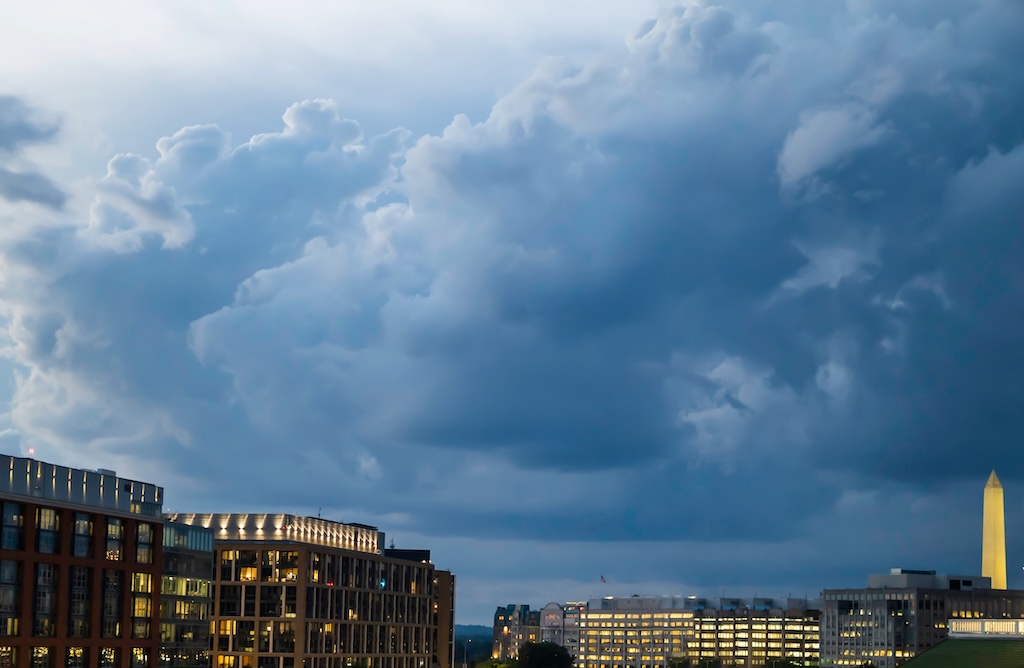
Photo by Claire Rowlett via Unsplash.
November 6, 2026
As the United States hosts the G20’s business forum for the first time, leaders from the world’s largest economies gather at Washington’s Wharf to hand governments a growth agenda built on energy, trade, and AI, and to see how many deals they can close before December’s Leaders’ Summit in Miami.
T
his November, the Business 20 comes home. From November 9 to 11, the B20 USA Summit takes over Washington’s Wharf District, with plenary sessions on the Anthem stage and a village of hosted venues that includes the National Governors Association’s Governors House, UK House, the POLITICO Pub, and Kalshi House. It is the first time the United States has hosted the G20’s private sector forum, and the U.S. Chamber of Commerce expects thousands of delegates from companies and countries that account for roughly three-quarters of world trade. The program opens Monday night with a ceremony and concert, then runs two mornings of plenary sessions moderated by journalists from CNBC, POLITICO, and Fortune. Four task forces — focused on economic growth, innovation, trade, and energy — frame the conversation. Their recommendations, published in the B20 Leaders’ Statement, provide the foundation for discussions at the summit and will help shape the business agenda that delegates will carry to G20 governments ahead of the December summit. The B20 opens on the heels of U.S. midterm elections that reflected escalating public concerns about inflation and tariffs, AI’s impact on jobs, and the growing strain of data centers on local communities.
Context
The B20 was born of crisis. In 2009, as the financial meltdown turned the G20 into the world’s main venue for economic coordination, the U.S. Chamber and a coalition of business federations helped create the B20 so the private sector had a formal channel into G20 policymaking. The United States has taken part in every cycle since. Until now, it had never hosted the B20.
That changed when Washington assumed the G20 presidency on December 1, 2025, pledging to return the group to what the administration calls its core mission of growth. Its stated priorities are limiting regulatory burdens, unlocking reliable and affordable energy, and pioneering new technologies. President Trump will host the Leaders’ Summit on December 14–15 at Trump National Doral Miami. The presidency has also been contentious. South Africa, the previous host, was left off the invitation list after the U.S. boycotted Johannesburg. Analysts at the South African Institute of International Affairs are among those who have argued that the narrowed agenda sidesteps the structural problems facing developing economies. Supporters counter that a tighter G20 is a more productive one.
The Chamber has taken the cue. B20 USA is led by co-chairs Suzanne P. Clark, the Chamber’s President and CEO, and Chamber Board of Directors member Ross Perot Jr., the founder and chairman of Hillwood Development Company. Former U.S. House Ways and Means Chairman Kevin Brady serves as Sherpa. Clark has described the year as aligned with the administration’s “back to basics” G20 agenda and set an ambitious target: use the B20 to help lift U.S. growth by a point or more. That is why this B20 adds something past cycles lacked: a deal making floor. Planning materials promise a “Hall of States and Cities” and an “Embassy Row” to connect foreign investors with American communities, noting that G20 nations already supply two-thirds of the $5.7 trillion in foreign direct investment in the United States. The summit also lands in America’s 250th year, a framing the hosts have leaned into from the start.
What’s on the agenda
Heading into B20 USA, here’s what to expect:
Powering the AI age. Energy is the summit’s loudest theme. The Energy Task Force, chaired by GE Vernova CEO Scott Strazik, wants G20 governments to push annual grid investment past $600 billion by 2030, scale nuclear to roughly 950 gigawatts by 2050, and cut permitting timelines to one to three years. This is a pace that only the fastest G20 economies achieve today. Wednesday’s plenary reads like an energy roundtable, with the CEOs of EQT, Williams, The Nuclear Company, and Lithium Americas alongside S&P Global’s Daniel Yergin. Shell USA and Halliburton take the stage Tuesday. These ambitions come amid growing resistance to data center expansion, fueled by concerns over rising electricity costs, water consumption, and other impacts on communities. The backlash raises questions about public support for the infrastructure needed to drive AI growth. Watch whether the ask for technology-neutral development finance for grids, which would open transmission projects in emerging markets to multilateral lending, finds a sponsor among G20 finance ministries.
Trade, in the host’s backyard. The Trade Task Force, chaired by Dow’s Jim Fitterling, is unusually blunt: its chapter of the Leaders’ Statement says WTO functions are “not fit for purpose” and calls for cutting the share of world imports subject to restrictive measures from 16.9 percent to 10 percent by 2030, halving the $2.5 trillion trade finance gap, and keeping digital trade duty-free. Delegations are arriving with tariffs on their minds. The Canadian Chamber, for one, built its mission program around Washington’s trade agenda and where it is going. With the CEOs of U.S. Steel, UPS, and DHL Express USA on the plenary bill, watch how candid foreign business leaders are willing to be about U.S. trade policy on American soil.
AI, innovation, and the workforce that uses it. Two task forces, led by Citadel’s Ken Griffin and Amazon’s David Zapolsky, converge on AI. They want 80 percent of businesses generating value from AI by 2028, up from 40 percent, national post-quantum cryptography plans by 2030, and R&D spending of 3 percent of GDP across the G20. This is a bar only four-member countries clear today. The workforce chapter asks governments to cut the share of employers citing skills gaps from 63 percent to below 40 percent, and to teach durable skills such as judgment and critical thinking alongside digital and AI literacy and personal finance. The stated emphasis on human capabilities, technological skills, and learning is especially relevant to Diplomatic Courier’s ongoing work with partners on the Future of Education. This includes efforts to define and advance the New Foundational Literacies young people need to navigate and lead in this unprecedented age of digital transformation. Watch to see whether governments treat these necessary skills as a shared public commitment or decide to leave them to employers and other organizations.
Deals, not just declarations. The Chamber has been explicit that this B20 is about inking deals and attracting foreign investment, not only drafting communiqués. Governors Wes Moore of Maryland and Mike Dunleavy of Alaska are on the plenary program, with additional events at Governors House over two days. Ambassadors from Canada and Italy are also among the featured participants. Watch for announced investments, and for whether the Chamber publishes a tally that lets observers judge the deal making claim on numbers.
The road to Miami. The B20’s influence is measured by what survives into the Leaders’ Declaration. The Economic Growth Task Force adds a request rarely heard from business forums: fiscal discipline. The task force notes that global public debt is approaching 100 percent of GDP by 2029 and that GDP growth outpaces debt growth in only five of 21 G20 members. Standard Bank Group CEO Sim Tshabalala speaks Wednesday and Sasol CEO Simon Baloyi co-chairs the Energy Task Force. With both based in South Africa, key business perspectives from there will remain inside the B20 process, even as the government is shut out of Miami. Watch to see whether business leaders can build consensus around the task force’s call for fiscal discipline despite the political tensions, and how the exclusion debate affects delegates.
Diplomatic Courier will be at the B20 summit in Washington, tracking emerging signals, progress toward investment deals, and other significant developments. The real test, of course, will come in Miami, where G20 leaders must decide whether to turn the B20’s recommendations into concrete commitments.
What they’re saying
“The difference between 2% and 3% growth transforms lives.”
—Suzanne P. Clark, President and CEO, U.S. Chamber of Commerce, and B20 USA Co-Chair
“The world needs more electricity so that people and the planet can thrive.”
—Scott Strazik, CEO and President, GE Vernova, and B20 USA Energy Task Force Chair
“This is business leaders bringing policy recommendations to these governments.”
—Kevin Brady, B20 USA Sherpa and former Chairman, U.S. House Ways and Means Committee
AI disclosure note: AI [Claude Opus 5.5] assisted in the research and outline of the article before it was drafted by the author.
Learn more: diplomaticourier.com/ai-transparency.


