


n 26 January 2026, INTERPOL released the findings of Operation Liberterra III, a coordinated global law enforcement operation that provides a timely operational snapshot of how irregular migration and human trafficking intersect in practice. Conducted across 119 countries between 10-21 November 2025, the operation mobilized more than 14,000 officers, detected 12,992 irregular migrants, safeguarded 4,414 potential victims of human trafficking, and resulted in 3,744 arrests linked to migrant smuggling and trafficking networks. Authorities also opened more than 720 new investigations, many of which remain active.
The importance of these findings lies not simply in their scale, but in their configuration. Migration and trafficking did not appear as separate phenomena addressed by different systems. They surfaced together, along the same routes, managed by the same criminal networks, and sustained by the same incentives. Irregular migration did not merely coincide with exploitation; it created the conditions in which exploitation could be organized and sustained across borders.
For many years, public debate has treated irregular migration primarily as a humanitarian concern, while trafficking has been framed as a criminal deviation that emerges when systems fail. The evidence from Operation Liberterra III suggests a more structural relationship. Trafficking—particularly sexual exploitation and forced prostitution—is not an incidental byproduct of irregular migration systems. It is one of their most predictable outcomes when governance gaps persist.
The mechanism is relatively straightforward. Once an individual crosses a border outside regular legal frameworks, legal visibility diminishes. For women in particular, this loss can be decisive. The ability to report abuse, leave an exploitative situation, or seek protection becomes contingent on immigration status. Control shifts to whoever holds documents, debt, or access to work. In such circumstances, physical restraint is often unnecessary; the threat of exposure, detention, or removal can be sufficient. Dependence becomes embedded.
This pattern appears consistently across destination countries.
Across the European Union, trafficking figures have reached their highest recorded level since comparable data collection began. According to figures highlighted by the European Commission, 10,793 victims of human trafficking were registered in the EU in 2023—the highest total in the 2008–2023 series. Approximately 63% were women or girls, and nearly two–thirds were non–EU nationals, a profile that closely mirrors irregular migration flows into the bloc. Sexual exploitation remains the most frequently identified form of trafficking.
Germany illustrates how this manifests within a high–capacity state. The U.S. State Department’s 2025 Trafficking in Persons Report records 596 trafficking victims identified in the most recent reporting period, 406 of them exploited for sex. These cases were not uncovered at borders, but within ordinary urban environments–apartments, massage parlors, escort services, and online platforms—where insecure legal status sharply limited recourse and bargaining power.
Spain reflects similar dynamics. In a case reported by Reuters, Spanish police dismantled trafficking networks involving women from Latin America and Africa who entered through irregular or semi–legal routes. Investigators documented hundreds of women trafficked under false employment promises, stripped of documents, and forced into prostitution in nightclubs and private apartments. Control relied less on overt violence than on the persistent reminder that their presence in the country was insecure.
Italy further clarifies the causal chain. Italian authorities report that a significant proportion of trafficking victims are identified inside migrant reception centers or shortly after arrival. The U.S. Trafficking in Persons Report notes that Italy identified more than 540 trafficking victims, nearly half exploited for sexual purposes, and that some victims had already been sexually abused while still in transit through North Africa. In these cases, exploitation preceded settlement; the journey itself formed part of the extraction process.
The United Kingdom, despite geographic separation from continental routes, exhibits related pressures. Reuters reports that Britain recorded 19,125 referrals of potential modern–slavery victims in 2024, an all–time high.
Identification, however, does not guarantee protection. The Guardian reported that nearly 6,000 potential victims opted out of the UK’s support framework in 2024, citing fears of deportation and distrust of authorities. In practice, irregular status can continue to function as a mechanism of control even after traffickers are removed.
The central issue is not that every irregular migrant is trafficked. It is that irregular migration creates large populations living in legal and administrative limbo, where reporting abuse carries risk and silence may appear safer. In such environments, exploitation becomes easier to organize and more difficult to disrupt.
INTERPOL’s own analysis underscores this convergence: migrant smuggling and human trafficking are not distinct criminal enterprises, but overlapping activities carried out by the same networks, adapting fluidly as opportunities arise.
What Operation Liberterra III ultimately captures is the consequence of a persistent policy blind spot. Irregular migration is often treated as a technical or administrative problem, rather than as a condition that reshapes power, incentives, and vulnerability. In such settings, exploitation is not a tragic anomaly; it becomes a stable and predictable outcome.
A durable policy response therefore requires moving beyond the familiar humanitarian–versus–enforcement framing. The more relevant distinction is between systems in which states retain effective governance and those in which governance is ceded—by default—to criminal intermediaries. Where prolonged legal limbo, weak enforcement, or inconsistent protection persist, other actors step in to fill the gap.
If governments wish to reduce sexual exploitation, they must confront this reality directly. Irregular migration, left unmanaged, does not merely expose vulnerability; it redistributes power. And power, once ceded, is difficult to reclaim through intention alone.


a global affairs media network
How irregular migration fuels sexual exploitation
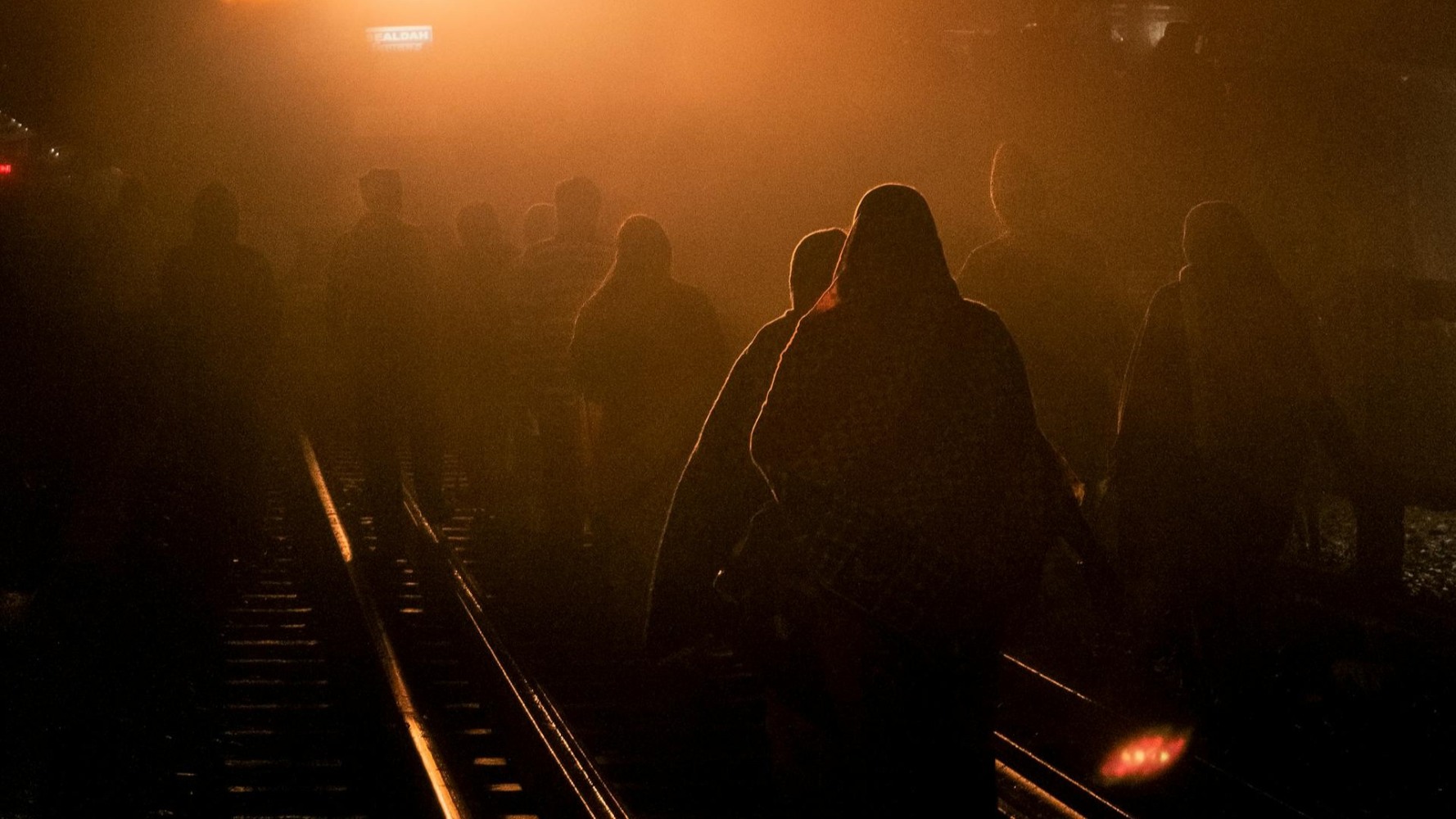
Photo by Kuntal Biswas via Pexels.
February 10, 2026
Irregular migration is often treated as a technical, administrative problem. This makes policymakers blind to how irregular migration creates the conditions for human trafficking to thrive—requiring a response beyond the familiar humanitarian–versus–enforcement framing, writes Kevin Cohen.
O
n 26 January 2026, INTERPOL released the findings of Operation Liberterra III, a coordinated global law enforcement operation that provides a timely operational snapshot of how irregular migration and human trafficking intersect in practice. Conducted across 119 countries between 10-21 November 2025, the operation mobilized more than 14,000 officers, detected 12,992 irregular migrants, safeguarded 4,414 potential victims of human trafficking, and resulted in 3,744 arrests linked to migrant smuggling and trafficking networks. Authorities also opened more than 720 new investigations, many of which remain active.
The importance of these findings lies not simply in their scale, but in their configuration. Migration and trafficking did not appear as separate phenomena addressed by different systems. They surfaced together, along the same routes, managed by the same criminal networks, and sustained by the same incentives. Irregular migration did not merely coincide with exploitation; it created the conditions in which exploitation could be organized and sustained across borders.
For many years, public debate has treated irregular migration primarily as a humanitarian concern, while trafficking has been framed as a criminal deviation that emerges when systems fail. The evidence from Operation Liberterra III suggests a more structural relationship. Trafficking—particularly sexual exploitation and forced prostitution—is not an incidental byproduct of irregular migration systems. It is one of their most predictable outcomes when governance gaps persist.
The mechanism is relatively straightforward. Once an individual crosses a border outside regular legal frameworks, legal visibility diminishes. For women in particular, this loss can be decisive. The ability to report abuse, leave an exploitative situation, or seek protection becomes contingent on immigration status. Control shifts to whoever holds documents, debt, or access to work. In such circumstances, physical restraint is often unnecessary; the threat of exposure, detention, or removal can be sufficient. Dependence becomes embedded.
This pattern appears consistently across destination countries.
Across the European Union, trafficking figures have reached their highest recorded level since comparable data collection began. According to figures highlighted by the European Commission, 10,793 victims of human trafficking were registered in the EU in 2023—the highest total in the 2008–2023 series. Approximately 63% were women or girls, and nearly two–thirds were non–EU nationals, a profile that closely mirrors irregular migration flows into the bloc. Sexual exploitation remains the most frequently identified form of trafficking.
Germany illustrates how this manifests within a high–capacity state. The U.S. State Department’s 2025 Trafficking in Persons Report records 596 trafficking victims identified in the most recent reporting period, 406 of them exploited for sex. These cases were not uncovered at borders, but within ordinary urban environments–apartments, massage parlors, escort services, and online platforms—where insecure legal status sharply limited recourse and bargaining power.
Spain reflects similar dynamics. In a case reported by Reuters, Spanish police dismantled trafficking networks involving women from Latin America and Africa who entered through irregular or semi–legal routes. Investigators documented hundreds of women trafficked under false employment promises, stripped of documents, and forced into prostitution in nightclubs and private apartments. Control relied less on overt violence than on the persistent reminder that their presence in the country was insecure.
Italy further clarifies the causal chain. Italian authorities report that a significant proportion of trafficking victims are identified inside migrant reception centers or shortly after arrival. The U.S. Trafficking in Persons Report notes that Italy identified more than 540 trafficking victims, nearly half exploited for sexual purposes, and that some victims had already been sexually abused while still in transit through North Africa. In these cases, exploitation preceded settlement; the journey itself formed part of the extraction process.
The United Kingdom, despite geographic separation from continental routes, exhibits related pressures. Reuters reports that Britain recorded 19,125 referrals of potential modern–slavery victims in 2024, an all–time high.
Identification, however, does not guarantee protection. The Guardian reported that nearly 6,000 potential victims opted out of the UK’s support framework in 2024, citing fears of deportation and distrust of authorities. In practice, irregular status can continue to function as a mechanism of control even after traffickers are removed.
The central issue is not that every irregular migrant is trafficked. It is that irregular migration creates large populations living in legal and administrative limbo, where reporting abuse carries risk and silence may appear safer. In such environments, exploitation becomes easier to organize and more difficult to disrupt.
INTERPOL’s own analysis underscores this convergence: migrant smuggling and human trafficking are not distinct criminal enterprises, but overlapping activities carried out by the same networks, adapting fluidly as opportunities arise.
What Operation Liberterra III ultimately captures is the consequence of a persistent policy blind spot. Irregular migration is often treated as a technical or administrative problem, rather than as a condition that reshapes power, incentives, and vulnerability. In such settings, exploitation is not a tragic anomaly; it becomes a stable and predictable outcome.
A durable policy response therefore requires moving beyond the familiar humanitarian–versus–enforcement framing. The more relevant distinction is between systems in which states retain effective governance and those in which governance is ceded—by default—to criminal intermediaries. Where prolonged legal limbo, weak enforcement, or inconsistent protection persist, other actors step in to fill the gap.
If governments wish to reduce sexual exploitation, they must confront this reality directly. Irregular migration, left unmanaged, does not merely expose vulnerability; it redistributes power. And power, once ceded, is difficult to reclaim through intention alone.


