


OP30 in Belém, Brazil, concluded with the adoption of the “Belém Political Package,” including a cover decision “Global Mutirão: Uniting humanity in a global mobilization against climate change.” From the outset, COP30 was said to be held amid the most geopolitically challenging circumstances in the 30–year history of the climate talks.
In this context, the outcome represented a modest but nevertheless real step in the right direction, with the Brazilian Presidency emphasizing that landmark outcomes emerged from the negotiations. The Presidency made concerted efforts to avoid the agenda disputes that have tended to delay negotiations at recent COPs by coordinating four tricky issues (finance, trade measures, 1.5℃ ambition, and transparency) through consultations. At the same time, the Presidency sought to bring to the negotiating table the roadmap for transitioning away from fossil fuels, which eventually became one of the most contested issues at COP30.
Consequently, this COP may have disappointed many participants and reinforced the impression that progress within the climate regime remains painfully slow. Many observers called it a missed opportunity, including the failure to include a fossil fuel roadmap in the decision text. Nevertheless, significant advances were achieved, and a strong step toward rights–based climate action was taken. This is key at a time when focus is firmly on implementation of the Paris Agreement—with one of the three pillars of the Global Mutirão decision: “From negotiation to implementation: Paris Agreement policy cycle fully in motion.”
In this context of accelerating implementation, climate action grounded in rights must be pursued so that no one is left behind. So the creation of the Belém Action Mechanism for Just Transition represents remarkable progress on rights–based climate action. Just Transition emerged from efforts to secure workers’ rights and evolved into a comprehensive concept over time. The new mechanism is firmly anchored in all of the areas of climate action, including mitigation, adaptation, and loss and damage, to guide rights–based implementation of the Paris Agreement.
This is particularly noteworthy as Belém followed the landmark Advisory Opinion issued by the International Court of Justice, which underscored that states’ climate action must be informed by international human rights law. In this context, the adoption of the Belém gender action plan is an equally important development.
Though COP30 was dubbed the adaptation COP, it unfortunately raised significant concerns regarding action for those vulnerable to climate change impacts. In addition to the fossil fuel roadmap, the decision on the Global Goal on Adaptation was another missed opportunity. Adaptation indicators have been two years in the making through the UAE–Belém Work Programme, with significant efforts made by technical experts towards the promise of enhancing action and increasing accountability. However, the last–minute rewriting of the indicators behind closed doors was perceived negatively by several parties, who expressed their concerns during the closing plenary.
Nevertheless, we should also recognize some positive achievements. The Belém Adaptation Indicators have been adopted as the first–ever internationally agreed set of indicators for adaptation, with several follow–up activities—including a new policy alignment process, the Belém–Addis Vision on Adaptation. With a decision on the long–awaited National Adaptation Plan assessment and a limited but significant agreement to triple adaptation finance by 2035, COP30 has certainly delivered progress towards addressing the intensifying impacts of climate change. Now the task for adaptation practitioners is to ensure that these indicators and related efforts work to achieve better adaptation outcomes for vulnerable people and communities.
With these results, COP30 has left participants and observers with mixed feelings as always. Some can claim that it has delivered what it was supposed to, while others may say there is a systemic failure or collapse in climate negotiations. The symbolic failure to adopt critical agreements, such as the fossil fuel roadmap, inevitably raises the question: in the current geopolitical landscape, can COPs still uphold multilateralism to deliver ambitious global climate action?
Rather than answering this question with a simple yes or no, let us recall the ICJ opinion. Crucially, while the Court underscored the central role of the UNFCCC and the Paris Agreement, it underlined that they constitute only part of the broader corpus of international law on climate change. International law on climate change must be understood as a whole, encompassing many other related norms and regimes. From this perspective, negotiations at COPs are not isolated processes; they are part of the web of diplomatic efforts and initiatives that surround them.
Of course, recent COPs have already seen various initiatives by like–minded countries and non–state parties outside the negotiations. But the fact that the Brazilian Presidency, supported by like–minded countries, tried to launch a fossil fuel roadmap even though it was not expected as a negotiation item, may be regarded as one evolution within this widened perspective on the role of COPs (but of course, being mindful that some have called it an act of hijacking). In other words, it signals that the boundaries between diplomatic efforts within the negotiations and those beyond are gradually blurring, making the process even more complex. But it presents an opportunity: the Brazilian Presidency will bring forward roadmaps for transitioning away from fossil fuels and deforestation, to be presented at COP31, while flagging their interactions with other processes, such as the upcoming conference on the Transition Away from Fossil Fuels to be co–hosted by Colombia and the Netherlands. With these multiple tracks ahead, the results and outlook of COP30 are another reminder that the efforts of diverse actors leading up to COP31 will be key to achieving better, more ambitious outcomes.
The views expressed in this article are those of the author and do not necessarily reflect the views of the United Nations University.


a global affairs media network
COP30 was a step forward for rights–based climate action
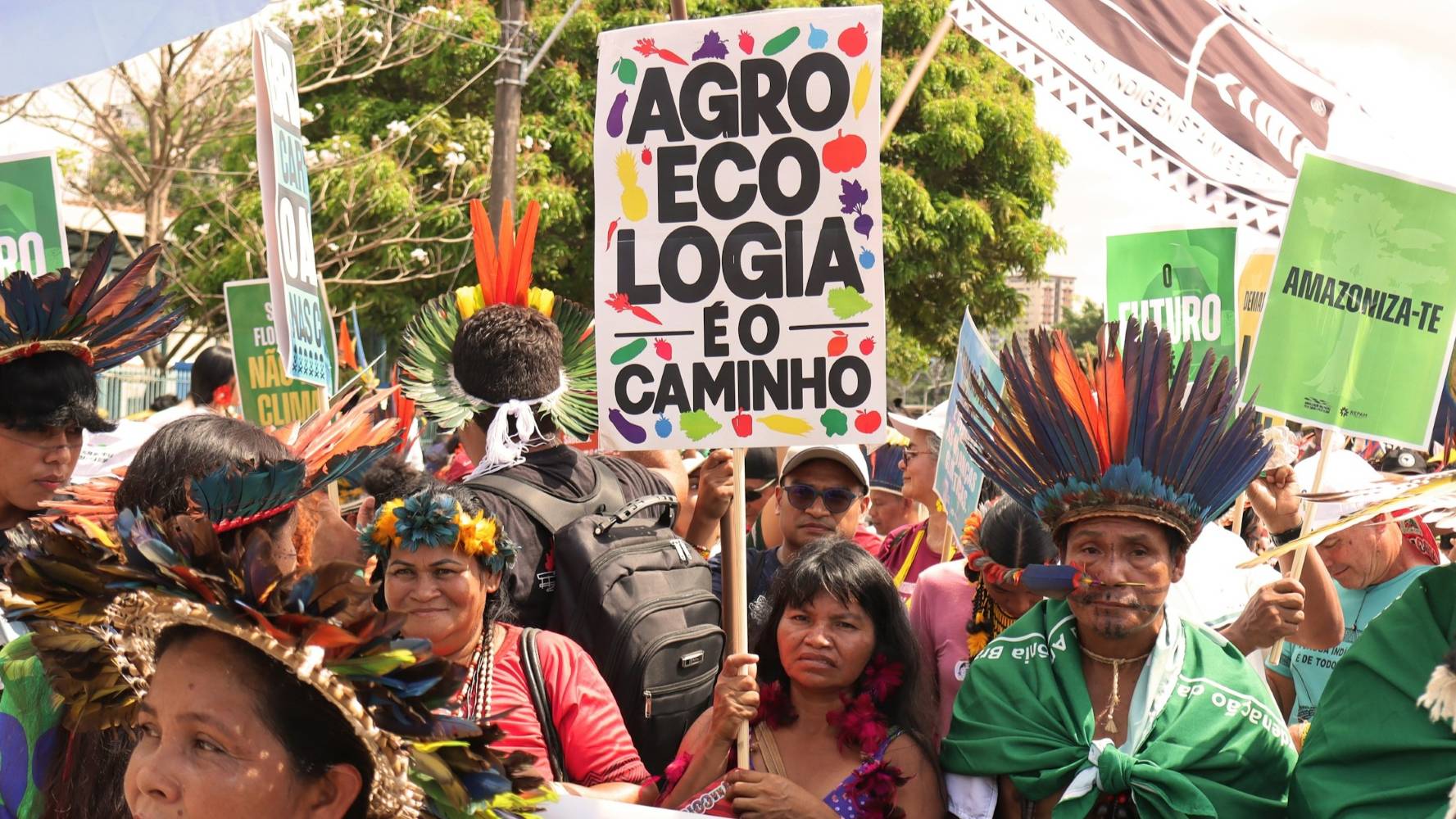
Photo by Mirna Wabi-Sabi on Unsplash.
December 16, 2025
While there have been missed opportunities regarding transitioning away from fossil fuels, COP30 delivered slow but meaningful gains, advancing rights-based climate action despite geopolitical tensions, writes Dr. Naoyuki Okano.
C
OP30 in Belém, Brazil, concluded with the adoption of the “Belém Political Package,” including a cover decision “Global Mutirão: Uniting humanity in a global mobilization against climate change.” From the outset, COP30 was said to be held amid the most geopolitically challenging circumstances in the 30–year history of the climate talks.
In this context, the outcome represented a modest but nevertheless real step in the right direction, with the Brazilian Presidency emphasizing that landmark outcomes emerged from the negotiations. The Presidency made concerted efforts to avoid the agenda disputes that have tended to delay negotiations at recent COPs by coordinating four tricky issues (finance, trade measures, 1.5℃ ambition, and transparency) through consultations. At the same time, the Presidency sought to bring to the negotiating table the roadmap for transitioning away from fossil fuels, which eventually became one of the most contested issues at COP30.
Consequently, this COP may have disappointed many participants and reinforced the impression that progress within the climate regime remains painfully slow. Many observers called it a missed opportunity, including the failure to include a fossil fuel roadmap in the decision text. Nevertheless, significant advances were achieved, and a strong step toward rights–based climate action was taken. This is key at a time when focus is firmly on implementation of the Paris Agreement—with one of the three pillars of the Global Mutirão decision: “From negotiation to implementation: Paris Agreement policy cycle fully in motion.”
In this context of accelerating implementation, climate action grounded in rights must be pursued so that no one is left behind. So the creation of the Belém Action Mechanism for Just Transition represents remarkable progress on rights–based climate action. Just Transition emerged from efforts to secure workers’ rights and evolved into a comprehensive concept over time. The new mechanism is firmly anchored in all of the areas of climate action, including mitigation, adaptation, and loss and damage, to guide rights–based implementation of the Paris Agreement.
This is particularly noteworthy as Belém followed the landmark Advisory Opinion issued by the International Court of Justice, which underscored that states’ climate action must be informed by international human rights law. In this context, the adoption of the Belém gender action plan is an equally important development.
Though COP30 was dubbed the adaptation COP, it unfortunately raised significant concerns regarding action for those vulnerable to climate change impacts. In addition to the fossil fuel roadmap, the decision on the Global Goal on Adaptation was another missed opportunity. Adaptation indicators have been two years in the making through the UAE–Belém Work Programme, with significant efforts made by technical experts towards the promise of enhancing action and increasing accountability. However, the last–minute rewriting of the indicators behind closed doors was perceived negatively by several parties, who expressed their concerns during the closing plenary.
Nevertheless, we should also recognize some positive achievements. The Belém Adaptation Indicators have been adopted as the first–ever internationally agreed set of indicators for adaptation, with several follow–up activities—including a new policy alignment process, the Belém–Addis Vision on Adaptation. With a decision on the long–awaited National Adaptation Plan assessment and a limited but significant agreement to triple adaptation finance by 2035, COP30 has certainly delivered progress towards addressing the intensifying impacts of climate change. Now the task for adaptation practitioners is to ensure that these indicators and related efforts work to achieve better adaptation outcomes for vulnerable people and communities.
With these results, COP30 has left participants and observers with mixed feelings as always. Some can claim that it has delivered what it was supposed to, while others may say there is a systemic failure or collapse in climate negotiations. The symbolic failure to adopt critical agreements, such as the fossil fuel roadmap, inevitably raises the question: in the current geopolitical landscape, can COPs still uphold multilateralism to deliver ambitious global climate action?
Rather than answering this question with a simple yes or no, let us recall the ICJ opinion. Crucially, while the Court underscored the central role of the UNFCCC and the Paris Agreement, it underlined that they constitute only part of the broader corpus of international law on climate change. International law on climate change must be understood as a whole, encompassing many other related norms and regimes. From this perspective, negotiations at COPs are not isolated processes; they are part of the web of diplomatic efforts and initiatives that surround them.
Of course, recent COPs have already seen various initiatives by like–minded countries and non–state parties outside the negotiations. But the fact that the Brazilian Presidency, supported by like–minded countries, tried to launch a fossil fuel roadmap even though it was not expected as a negotiation item, may be regarded as one evolution within this widened perspective on the role of COPs (but of course, being mindful that some have called it an act of hijacking). In other words, it signals that the boundaries between diplomatic efforts within the negotiations and those beyond are gradually blurring, making the process even more complex. But it presents an opportunity: the Brazilian Presidency will bring forward roadmaps for transitioning away from fossil fuels and deforestation, to be presented at COP31, while flagging their interactions with other processes, such as the upcoming conference on the Transition Away from Fossil Fuels to be co–hosted by Colombia and the Netherlands. With these multiple tracks ahead, the results and outlook of COP30 are another reminder that the efforts of diverse actors leading up to COP31 will be key to achieving better, more ambitious outcomes.
The views expressed in this article are those of the author and do not necessarily reflect the views of the United Nations University.


